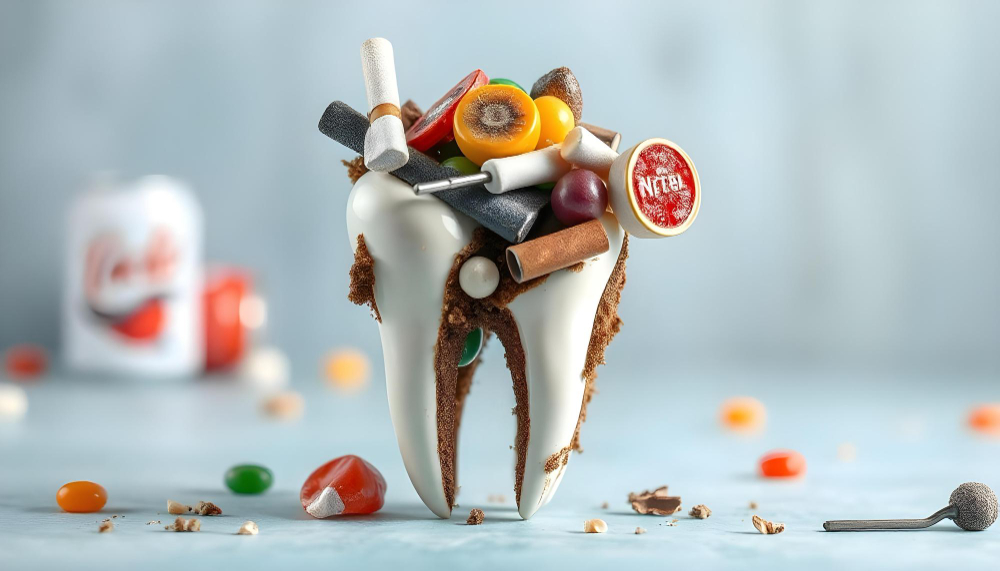
Cavities are small holes in teeth caused by tooth decay. They can lead to pain, infection, and even tooth loss if not treated. Many people do not realize that daily routines play a big part in dental health. In fact, some habits that can lead to cavities are common and easy to overlook. Knowing what causes cavities helps you make better choices for your teeth and overall health.
Eating Sugary Snacks and Drinks Often
Many people enjoy sweet snacks and drinks. However, eating or drinking sugar often gives bacteria in your mouth more fuel. As a result, these bacteria make acids that attack your teeth. Over time, this can cause cavities to form. For example, sipping soda or chewing candy throughout the day keeps sugar on your teeth. Instead, try to limit sweets to mealtimes. Additionally, choose water or milk instead of sugary drinks. Rinse your mouth with water after eating sweets to help wash away sugar.
Not Brushing and Flossing Regularly
Brushing and flossing remove food and plaque from your teeth. When you skip these steps, plaque builds up. This sticky film contains bacteria that can cause tooth decay. The CDC recommends brushing twice a day and flossing once a day. For example, brushing before bed helps remove food left from dinner. To make it easier, keep a toothbrush and floss in your bag or at work. Set reminders on your phone if you often forget.
Frequent Snacking Between Meals
Snacking all day gives bacteria more chances to make acid. Even healthy snacks, like dried fruit or crackers, can stick to your teeth. Because your mouth makes less saliva between meals, food particles stay longer. Try to eat snacks in one sitting instead of grazing. After snacking, drink water to help clean your mouth. Choose snacks like cheese, nuts, or fresh veggies, which are less likely to cause cavities.
Drinking Little or No Tap Water
Tap water in many areas contains fluoride, which helps protect teeth. If you drink mostly bottled water or sugary drinks, you may miss out on this benefit. In some cities, water fluoridation has lowered cavity rates. To help prevent tooth decay, drink tap water when possible. If you are unsure about your local water, ask your dentist or check with your city. You can also use fluoride toothpaste for extra protection.
Going to Bed Without Cleaning Your Teeth
At night, your mouth makes less saliva. This means food and bacteria can stay on your teeth longer. If you skip brushing before bed, acids have more time to damage your teeth. For example, falling asleep after a late-night snack without brushing can increase your risk for cavities. Make it a habit to brush and floss every night, even if you feel tired. Keep your toothbrush near your bed as a reminder.
How Cavities Develop
Cavities form when bacteria in your mouth turn sugar into acid. This acid slowly wears away the hard surface of your teeth, called enamel. Over time, a small hole or cavity can appear. Daily habits, such as what you eat and how you clean your teeth, affect this process. According to the CDC and WHO, good oral hygiene habits can stop or slow down tooth decay.
Prevention Tips
Following these dental health tips can help you avoid habits that can lead to cavities. Small changes in your daily routine can make a big difference in preventing tooth decay and keeping your smile healthy. Consult Dr. Hitesh Malviya now.