
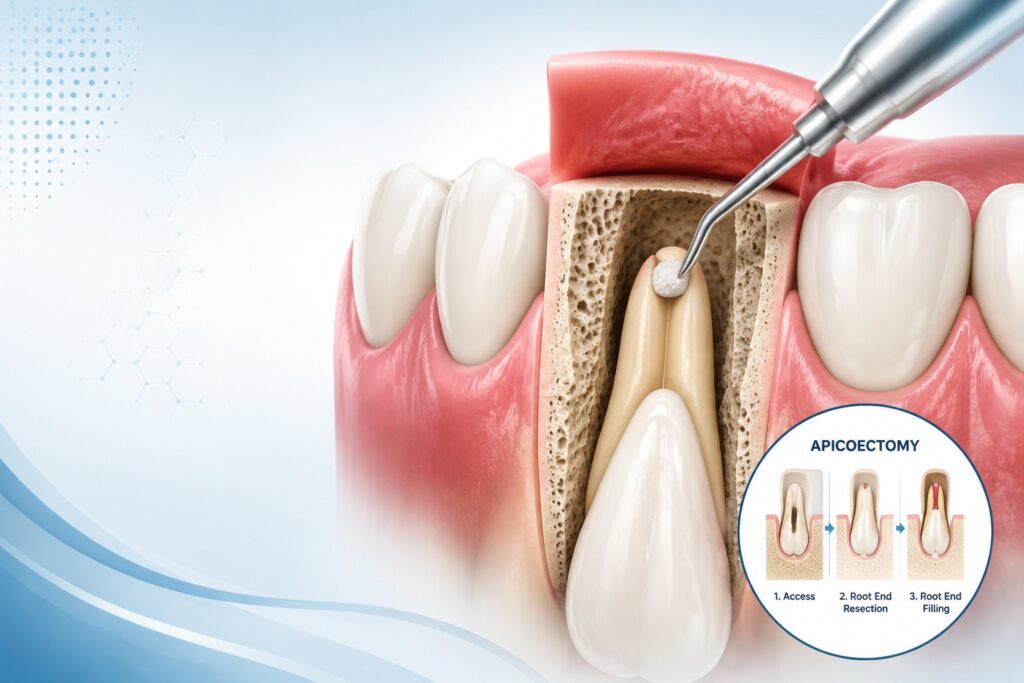
What Is an Apicoectomy?
An apicoectomy is a minor dental surgery. Dentists use it when a root canal treatment does not fully heal an infected tooth. In this procedure, the dentist removes the tip of the tooth’s root and any infected tissue. This surgery is also called root-end surgery. It is a common tooth-saving dental surgery. Many people choose it as a root canal surgery alternative. If you want to avoid losing your tooth, an apicoectomy may help.
Why Is an Apicoectomy Needed?
Sometimes, a root canal treatment does not remove all infection. In these cases, bacteria can stay at the tip of the root. As a result, pain or swelling may return. Instead of pulling the tooth, dentists may suggest an apicoectomy procedure. This surgery helps save your natural tooth. It is often the last step before considering tooth removal. For many, it is the best way to keep their smile healthy.
Symptoms Indicating You Might Need an Apicoectomy
Not everyone needs this surgery. However, you may need an apicoectomy if you notice these signs:
If you have these symptoms, talk to your dentist. Early action can prevent bigger problems.
How Is an Apicoectomy Performed?
The apicoectomy procedure is safe and usually done in a dental office. First, the dentist numbs the area. Then, they make a small cut in the gum near the tooth. Next, they remove the tip of the root and any infected tissue. After that, the dentist cleans the area and seals the root. Finally, they stitch the gum back in place. The whole process often takes less than an hour. Most people feel little pain during the surgery.
Recovery and Aftercare Tips
Dental apicoectomy recovery is usually quick. However, proper care is important. Here are some tips to help you heal:
Most people return to normal activities within a few days. If you notice heavy bleeding or severe pain, contact your dentist right away.
Risks and Benefits of Apicoectomy
Like any surgery, an apicoectomy has risks and benefits. However, most people find the benefits outweigh the risks. Here are some key points:
According to dental studies, apicoectomy success rates are high. Most patients keep their tooth for many years after the procedure. Still, it is important to follow your dentist’s advice for the best results.
Prevention: Caring for Your Teeth After Surgery
Good dental care helps prevent future problems. After an apicoectomy, you should:
With proper care, your tooth can stay healthy for a long time. Prevention is always better than cure.
In summary, an apicoectomy is a safe and effective way to save a tooth when root canal treatment alone is not enough. If you have ongoing pain or infection after a root canal, this procedure may help. Consult Dr. Hitesh Malviya for a detailed evaluation and personalized guidance to determine whether an apicoectomy is the right treatment for you.