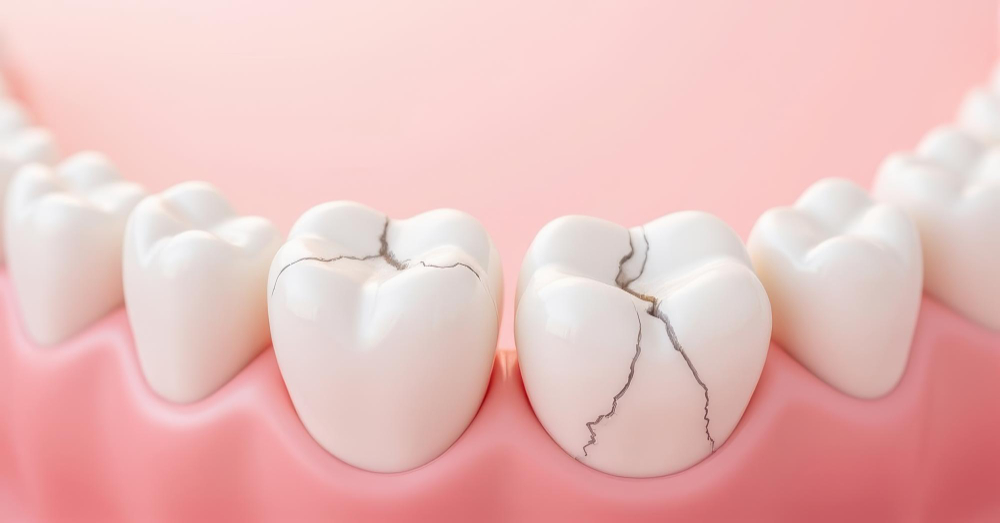
What is Cracked Tooth Syndrome?
Cracked tooth syndrome is a dental problem where a small crack forms in a tooth. Often, this crack is hard to see, even on X-rays. However, it can cause sharp or unexplained tooth pain. Many people do not realize they have a cracked tooth until the pain becomes severe. Dentists call this condition “cracked tooth syndrome.” It is a common cause of tooth pain that does not have an obvious reason. According to the American Association of Endodontists, early diagnosis is important for the best outcome.
Common Symptoms
Cracked tooth syndrome can cause a range of symptoms. Sometimes, the pain comes and goes. For example, you might feel pain only when chewing. Other times, the tooth may be sensitive to hot or cold foods. Here are some common signs:
Because these symptoms can be mild, many people ignore them. Yet, early attention can prevent bigger problems.
Causes and Risk Factors
There are several causes and risk factors for cracked tooth syndrome. Some cracks happen suddenly, while others develop over time. For instance, biting down on hard foods can cause a tooth to crack. In addition, teeth with large fillings are more likely to break. Here are some common causes and risks:
Because many people grind their teeth without knowing, this is a hidden risk. Regular dental checkups can help spot early signs.
How Dentists Diagnose Cracked Tooth Syndrome
Diagnosing cracked tooth syndrome can be tricky. Often, the crack is too small to see. Even X-rays may not show it. Still, dentists use several methods to find the problem. For example, they may:
Because early diagnosis is key, let your dentist know about any tooth pain, even if it seems minor. The process is called “dental crack diagnosis.” It helps find the exact cause of your discomfort.
Treatment Options
Treatment for cracked tooth syndrome depends on how deep the crack is. Sometimes, a simple filling can fix a small crack. Other times, more care is needed. Here are common treatments:
Because early treatment can save your tooth, do not delay seeing a dentist. The right treatment for cracked tooth syndrome can prevent further damage and pain.
Prevention Tips and Lifestyle Guidance
While not all cracks can be prevented, you can lower your risk. For example, making small changes in your daily habits helps protect your teeth. Here are some tips:
Because prevention is easier than treatment, these steps can help you avoid tooth fracture symptoms in the future.
When to See a Dentist
If you have unexplained tooth pain, do not ignore it. Even if the pain is mild or comes and goes, it could be a sign of a hidden crack. You should see a dentist if you notice:
Because cracked tooth syndrome can get worse over time, early care is important. The sooner you get help, the better your chances of saving your tooth.
Consult Dr.Hitesh Malviya for personalized advice if you suspect a cracked tooth.