Introduction to Microscope-Assisted Endodontics
Microscope-assisted endodontics is a modern dental technique. It uses a special dental microscope to treat tooth problems with great accuracy. Because of this precision dental technology, dentists can see tiny details inside your tooth. As a result, more teeth can be saved instead of removed. According to the American Association of Endodontists, using a microscope helps dentists find hidden canals and treat infections better. This means you have a higher chance of keeping your natural teeth.
Symptoms and Dental Issues Leading to Endodontic Treatment
Many people need endodontic treatment when the inside of a tooth becomes infected or damaged. Often, this happens due to deep cavities, cracks, or injuries. You might notice some warning signs. For example, you may feel:
If you notice any of these symptoms, you should see a dentist soon. Early treatment can help save your tooth.
How Microscope Technology Works in Endodontics
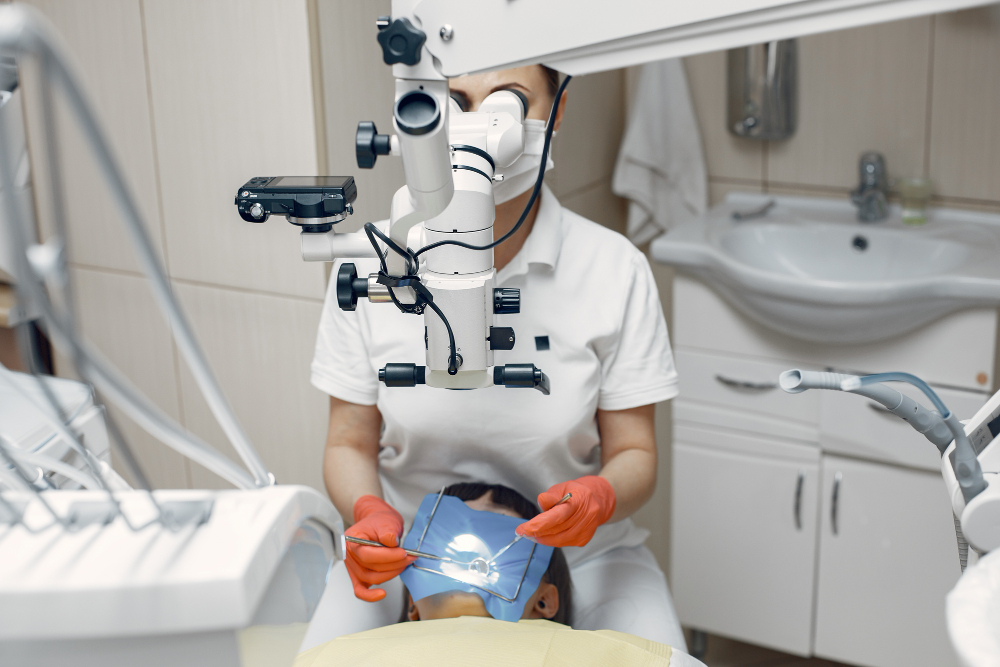
Microscope-assisted endodontics uses a dental microscope during root canal treatment. With this tool, dentists can see the inside of your tooth up to 25 times larger than normal. Because of this, they can spot tiny cracks, hidden canals, or leftover infection. For example, the microscope helps dentists clean and fill every part of the root. This reduces the chance of future problems. According to studies in dental journals, microscope use leads to better treatment results.
Benefits of Microscope-Assisted Procedures
There are many benefits to using microscope-assisted endodontics. Some of the main advantages include:
Therefore, microscope-assisted endodontics is a smart choice for many patients.
Step-by-Step Overview of the Treatment Process
Knowing what to expect can help you feel calm. Here is a simple step-by-step guide:
Each step uses precision dental technology to ensure the best results.
Recovery and Aftercare Tips
After your procedure, you may feel some soreness. However, most people recover quickly. To help your healing, follow these tips:
With proper care, your tooth can stay healthy for many years.
Prevention and Oral Health Guidance
Preventing dental problems is always best. For example, you can:
By following these steps, you can lower your risk of needing endodontic treatment.
Frequently Asked Questions
Conclusion
Microscope-assisted endodontics uses advanced precision technology to help preserve more natural teeth and improve treatment outcomes. Its accuracy and benefits make it an excellent option for many patients. At Malviya Dental Speciality, our dental experts provide personalized evaluation to determine if microscope-assisted endodontics is the right solution for your tooth care needs. Consult us for expert guidance and treatment.